Upton Sinclair said, “It is difficult to get a man to understand something when his salary depends on his not understanding it.” At this point it’s clear that AI will radically change so many things, but our intertwined system of institutions display a willful ignorance of this. Schools, for example, are still teaching the same. Parents are starting to wave their children away from art-related careers, and maybe writing too. In reality, the change will be much larger, but we’ll just wait and feel the effects before we do anything uncomfortable.
Category: Psychology
-
Uncertainty, Argh!
I just heard a talk at Lean Startup Machine NYC by Jonathan Fields, author of the book Uncertainty: Turning Fear and Doubt into Fuel for Brilliance. It was only about 20 minutes but had maybe the highest useful content density of any talk I’ve ever heard. Here’s a few notes:
A startup at the beginning is filled with uncertainty about your product, market, everything. We experience uncertainty as pain. Usually we react by changing speed: we slow to a crawl because we’re paralyzed by imperfect information, or we rush to the end to make the pain stop.
As you conduct experiments, data replaces uncertainty; the process eases us down the uncertainty curve.
So, don’t freak out. Get data, Focus conversations on the data.
Other excellent advice:
- We are not made to concentrate for more than 90 minutes. Our brain is wired to take breaks, that’s why ideas come to us in the shower. So, do 90 minutes of work, then 20-30 minutes of something unrelated. This reminds me of the Pomodoro Technique which helped me crank out several book chapters.
- We can manipulate intelligence by priming the brain, either positively or negatively. You could say to a group of men, “Men do 50% worse on this test you’re about to take” and they will! So, create positive priming, e.g. start meetings with 60 seconds of a story about something cool that happened today.
- Meditation and exercise are the two best innovation techniques anyone can practice, but ironically people in startups give them up first to do more work. Instead when we’re working hard we should double down on meditation and exercise. Spending quality time away from work improves the work, helping us do better work in less time.
-
User Experience Areas Explained
Can these disciplines be explained in two sentences?
Click for a larger version…

-
How Recruiting iPhone Designers is Like Raising Kids
 When two of the really amazing thinkers I admire — Ken Bain and Jeanne Liedtka — both say they admire Carol Dweck, I figure it’s time to figure out who Dweck is. Her latest book, Mindset, provides some fascinating psychological support for the power of play and prototyping, as she says…
People who believe in the power of talent tend not to fulfill their potential because they’re so concerned with looking smart and not making mistakes. But people who believe that talent can be developed are the ones who really push, stretch, confront their own mistakes and learn from them.
Janet Rae-Dupree, writing in the New York Times, reveals an interesting connection between Dweck and the iPhone:
-
Pundits and the Need for Certainty
The world is getting to be a whole lot more complex, and we seem to be reacting with increasing punditry, from cable news hosts to conference speakers (there are currently 14810 slideshows on Slideshare explaining the future of something or other). And of course I’m guilty of this as the next guy, so I thinking about this. Were we always like this, but now have more means of expressing it, or are we feeling more threatened by change and subsequently striving for relevancy by proclaiming our insights to the world?
Kurt Vonnegut had this to say about the guessers…We must acknowledge, though, that persuasive guessers—even Ivan the Terrible, now a hero in Russia—have given us courage to endure extraordinary ordeals that we had no way of understanding. Crop failures, wars, plagues, eruptions of volcanoes, babies being born dead—the guessers gave us the illusion that bad luck and good luck were understandable and could somehow be dealt with intelligently and effectively.
Without that illusion, we would all have surrendered long ago. But in fact, the guessers knew no more than the common people and sometimes less. The important thing was that they gave us the illusion that we’re in control of our destinies.
-
Is Play Important?

Business design people talk a lot about the importance of play at work, the sort of improvisation that — because it is both fun and challenging — encourages us to persist at an activity by generating new ideas. Robin Marantz Henig’s recent essay in the New York Times, Taking Play Seriously, focuses on the scientific study of play. In short, play seems to help animals develop in important ways, but we’re not sure exactly how it helps us or if we can develop just as well without it.
But here’s an interesting thought for us adults…
…Bateson, a prominent play scholar who recognizes the quandary posed by equifinality, suggested that play is the best way to reach certain goals. Through play, an individual avoids what he called the lure of ‘‘false endpoints,’’ a problem-solving style more typical of harried adults than of playful youngsters. False endpoints are avoided through play, Bateson wrote, because players are having so much fun that they keep noodling away at a problem and might well arrive at something better than the first, good-enough solution.
I’m definitely guilty of what the skeptics of play call “play ethos,” the reflexive, unexamined belief that play is an unmitigated good with a crucial, though vaguely defined, evolutionary function. Still, I hit a lot of false endpoints in the business world and can’t help but think we’d arrive at better solutions if everyone were just a wee bit more playful.
Update: Here’s a story on NPR on play and the importance of self-regulation… “we’re often using it to surmount obstacles, to master cognitive and social skills, and to manage our emotions.“
-
I’d Like to See More Discussion of Emotion Among Business Designers
I was very frustrated at work yesterday thinking through a key business issue with a lot of variables in play, and the emotion was clouding my ability to think about the problem. Approaching the problem creatively was even harder, even though I was aware of this obstacle at the time. And of course this is not a novel problem, it happens to most of us in business.
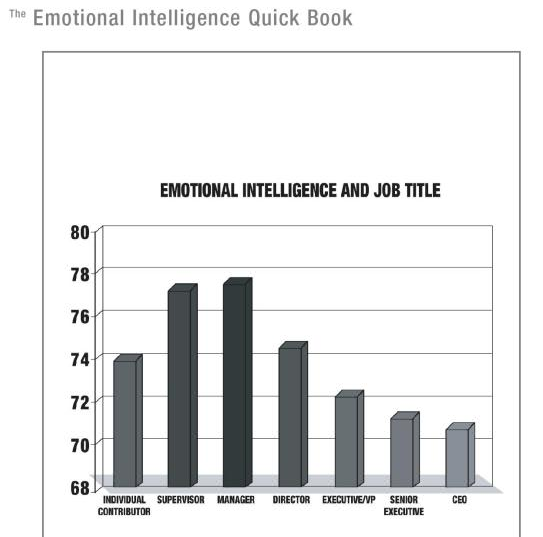
I’ve written before about not denying our emotions, channeling anger at work, and seen evidence that managers need high emotional intelligence.
But I haven’t seen much discussion on the topic from people who are interested in business design. It’s a taboo in corporate life that won’t be discarded easily, because we associate calm, collected behavior with professionalism, and anything else can be scary. All the more reason to address the use of emotions at work head on and figure out how to summon and channel productive emotions that fuel creativity and motivation without making individuals upset with themselves or others.
The start of a list of ideas for doing this:
- Identify what kind of work arouses each person on a team and try to focus them on it
- Teach everyone on the team the concept of flow and when to recognize their own signs of anxiety or boredom, and to communicate these to others on the team so the work can be adjusted accordingly
- Develop a trademark style or practice of the firm that has a positive emotional effect. Broadcast this so that others who respond to it naturally come to the firm (as employees, clients, etc).
-
Does Strategic Thinking Reduce Stress?
If you’re a designer, you can become very stressed over a small product detail, something so small most customers may not notice. If you’re a product manager, you may attend to the product details without stressing over them because you see the bigger picture of how the product competes in the market and what the true competitive advantages are.
And this scenario scales. A business unit manager may fret over a $50 million decision. If you’re Jeffrey Immelt, CEO at GE, that’s not a stressful decision, the big decisions are about billions of dollars. So Immelt spends time coaching managers through the $50 million situations.
In short, I find the bigger the picture one considers, the less one sweats the small stuff.
-
Want to Be An Expert? Practice for Ten Years
In Daniel Coyle’s article on Russian tennis players we receive another interesting tidbit from the Cambridge Handbook of Expertise and Expert Performance. We already knew about the need for feedback, but this is the first I’ve heard of the Ten-Year Rule: “an intriguing finding dating to 1899, which shows that even the most talented individual requires a decade of committed practice before reaching world-class level.”
That makes me feel better about all the skills I’m still struggling with.
And if you’re looking to turn your child into a super athlete, the U.S. Olympic committee leverages the ten-year rule to provide advice on windows of optimal trainability.
-
Engage: Resources on Designing for Emotion
Trevor van Gorp just pointed me to the Engage site which — once you’ve completed the free registration — has a wealth of resources for doing research and design with emotions in mind (which, given we’re emotional creatures, should be pretty much always).
Trevor, incidentally, just finished an impressive master’s thesis at the University of Calgary on emotional state chaining. Hopefully he’ll start doing workshops to teach his techniques to the rest of us. He’ll have a website up soon.
-
The Neuroscience of Leadership
I agree with Ed when he says of The Neuroscience of Leadership “it’s an outstanding piece of work, well worth your time” but that the authors’ critique of humanism is both lame and unnecessary.
-
Female masters of innovation
Last year I went back to Jeanne Lietdke’s Strategy as Design article for a second, close reading. One thought I came away with was, “It’s not too surprising this has come from a woman. The creative embrace of conflict, the willingness to stay in the problem space, the lack of need to control a situation and instead turn it into a new situation… it intuitively feels right that a woman would write that piece.” My colleagues — male and female — thought I was nuts for saying so. I know these aren’t exclusively female qualities, but I see them more often in women than men.
I thought of this just now looking at IN’s 25 Masters of Innovation. 17 of the 25 are women. I don’t want to draw any conclusion from this, but it’s another interesting data point.
-
Better generalizations: finding true relationships between categories and traits
Malcolm Gladwell’s Troublemakers extends his Blink thinking to how we generalize. The takeaway is “It doesn’t work to generalize about a relationship between a category and a trait when that relationship isn’t stable — or when the act of generalizing may itself change the basis of the generalization.”
In the article he asks whether pit bulls are dangerous dogs. It turns out they are only dangerous if bred, trained, or raised to be dangerous. A better indication of whether a dog may attack is if the dog displays aggressive behavior and has a negligent owner. Not an earth-shaking conclusion, but one we don’t always take the time to investigate.
-
Call an expert or toss a coin?
Louis Menand reviewed Philip Tetlock’s new book, “Expert Political Judgment: How Good Is It? How Can We Know?†which summarizes a twenty year study of people who make prediction their business. In short, their predictions are “worse than dart-throwing monkeys.”
This is good news for strategists using future planning tools like scenario planning: they don’t need to be experts in order to find plausible (as opposed to probable) stories of the future. Unfortunately, the distinction between a futurist and an expert may be lost on many.
Here’s my favorite bits from Menand’s article:
[Experts] have the same repertoire of self-justifications that everyone has, and are no more inclined than anyone else to revise their beliefs about the way the world works, or ought to work, just because they made a mistake.
“Experts in demand,†Tetlock says, “were more overconfident than their colleagues who eked out existences far from the limelight.â€
“Expert Political Judgment†is just one of more than a hundred studies that have pitted experts against statistical or actuarial formulas, and in almost all of those studies the people either do no better than the formulas or do worse.
The experts’ trouble in Tetlock’s study is exactly the trouble that all human beings have: we fall in love with our hunches, and we really, really hate to be wrong.
Most people tend to dismiss new information that doesn’t fit with what they already believe. Tetlock found that his experts used a double standard: they were much tougher in assessing the validity of information that undercut their theory than they were in crediting information that supported it… In the terms of Karl Popper’s famous example, to verify our intuition that all swans are white we look for lots more white swans, when what we should really be looking for is one black swan.
…like most of us, experts violate a fundamental rule of probabilities by tending to find scenarios with more variables more likely. If a prediction needs two independent things to happen in order for it to be true, its probability is the product of the probability of each of the things it depends on.
Tetlock: “Low scorers look like hedgehogs: thinkers who “know one big thing,†aggressively extend the explanatory reach of that one big thing into new domains, display bristly impatience with those who “do not get it,†and express considerable confidence that they are already pretty proficient forecasters, at least in the long term. High scorers look like foxes: thinkers who know many small things (tricks of their trade), are skeptical of grand schemes, see explanation and prediction not as deductive exercises but rather as exercises in flexible “ad hocery†that require stitching together diverse sources of information, and are rather diffident about their own forecasting prowess.”
In world affairs, parsimony may be a liability—but, even there, there can be traps in the kind of highly integrative thinking that is characteristic of foxes.